Foundations
Red light therapy
One of the most searched — and most misunderstood — terms in skincare. Here is what it actually means.
What the term describes
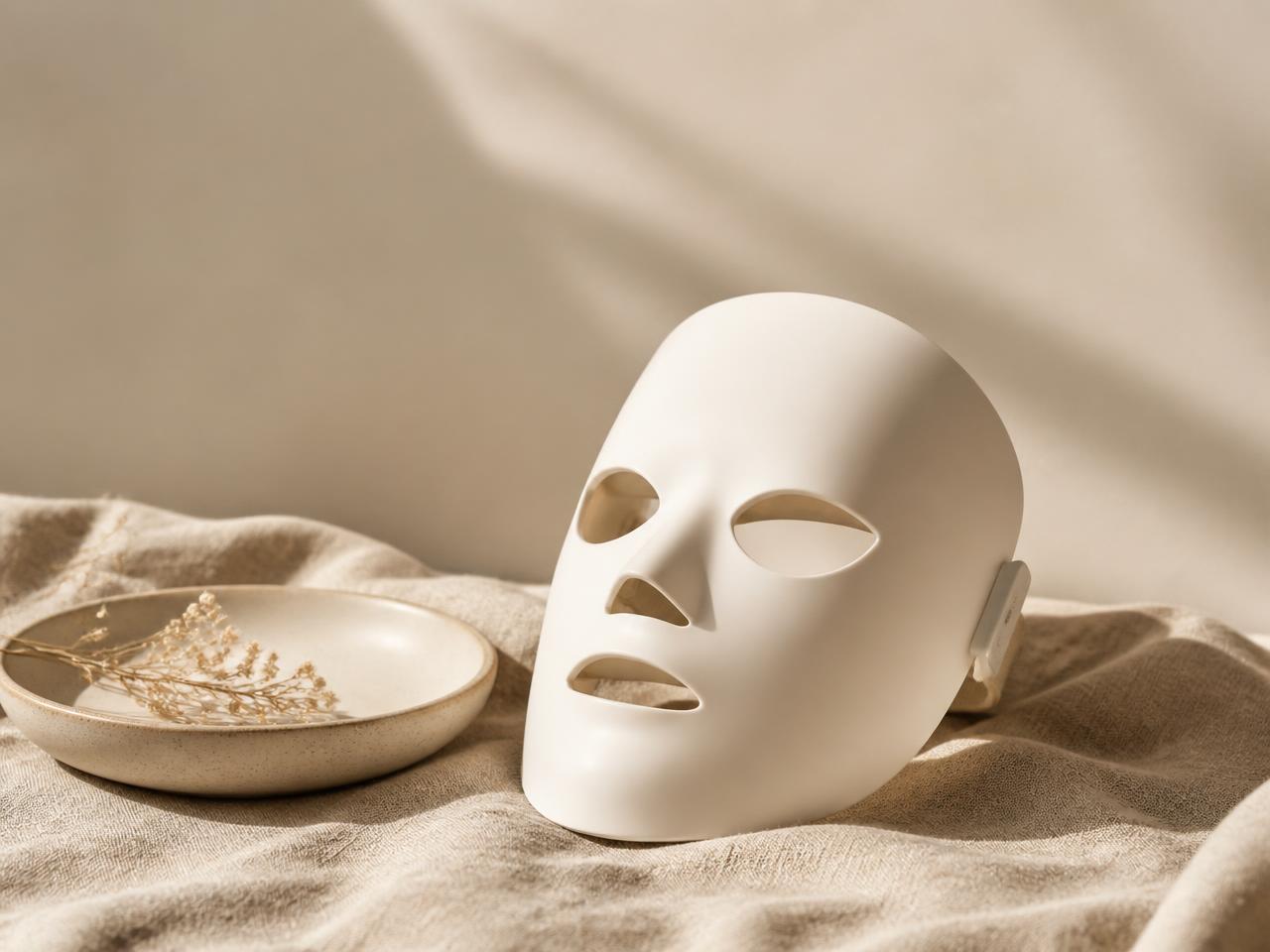
Red light therapy is an everyday description of using red wavelengths of visible light on the skin. In skincare it nearly always means LED-delivered light, in the region of roughly 600 to 700 nanometres, which is why it looks deep rose or crimson.
It is a description of a technology rather than a promise of a result. Two devices can both be called red light therapy and differ substantially in what they emit and how they are used.
Red and near-infrared are not the same
Near-infrared light sits just beyond the visible red band. Because it is largely invisible, a device can be emitting near-infrared while that section appears dim or switched off.
Many devices combine both. Which combination suits you depends on the device's published specification and how you intend to use it — not on which sounds more advanced.
At home versus in clinic
Professional treatments typically use larger equipment, operated by a trained practitioner, often at higher output and for a set protocol. At-home devices are designed to be safe for unsupervised use, which generally means lower output and shorter, more frequent sessions.
Neither is a substitute for the other. An at-home device is best understood as part of a routine you can keep up, rather than a compressed version of a clinic treatment.
Reading a specification honestly
The useful figures are the wavelengths emitted, the number of diodes, the recommended session length and frequency, and what the manufacturer says about eye protection and contraindications.
Where confirmed, we publish manufacturer-supplied specifications for the devices we sell. Where a figure is not confirmed, we leave it out rather than estimating it.
Ilumi London devices are cosmetic products, not medical devices, and are not intended to diagnose, treat, cure or prevent any condition.